
Introduction to Autonomous Vehicles
As AI technology continues to advance at a rapid pace, its integration into daily life is becoming increasingly prevalent. The concept of autonomous vehicles, once confined to the realm of science fiction, is now on the cusp of revolutionizing the way we travel. A significant area of interest and development is in autonomous driving, with tech giants like Nvidia at the forefront of innovation.
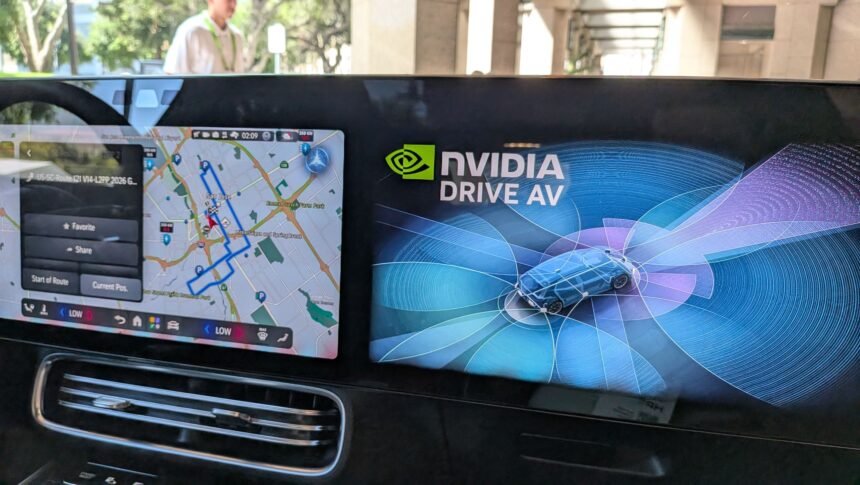
An Inside Look at Nvidia-Powered Autonomous Mercedes
Recently, I had the opportunity to experience the future of transportation firsthand by taking a ride in an Nvidia-powered autonomous Mercedes at the GTC 2026 conference. This experience not only showcased the impressive capabilities of autonomous vehicles but also underscored the potential of AI in transforming the automotive industry. The integration of Nvidia’s advanced computing technology with Mercedes’ automotive expertise has resulted in a truly remarkable driving experience.
Key Features and Benefits
- Enhanced Safety: Autonomous vehicles equipped with Nvidia’s technology boast advanced safety features, including real-time data processing and analysis, enabling them to respond promptly to their environment.
- Increased Efficiency: By optimizing routes and reducing congestion, autonomous vehicles can significantly decrease travel times and improve overall traffic flow.
- Environmental Benefits: Autonomous electric vehicles have the potential to reduce greenhouse gas emissions substantially, contributing to a more sustainable future.
The future of transportation is undoubtedly autonomous, and with companies like Nvidia and Mercedes leading the charge, we can expect significant advancements in the years to come. As AI continues to evolve, the possibilities for innovation in the automotive sector are endless, promising a safer, more efficient, and environmentally friendly travel experience for all.