
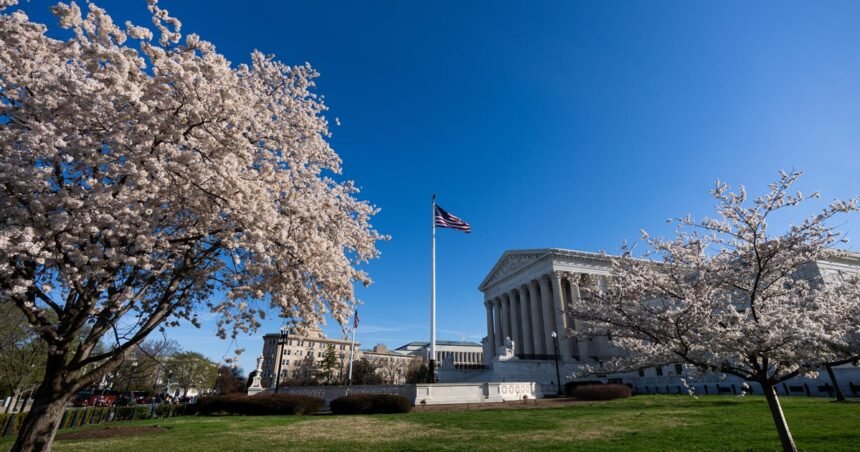
The Battle for Birthright Citizenship
A highly anticipated case is set to unfold at the Supreme Court, as the legality of President Trump’s executive order on birthright citizenship takes center stage. The order, which aims to put an end to the long-standing practice of granting automatic citizenship to children born in the United States to non-citizen parents, has sparked intense debate and division.
The Supreme Court’s decision will have far-reaching implications, potentially altering the course of American history and the lives of countless individuals. The case is being closely watched by legal experts, policymakers, and the general public, as it raises fundamental questions about the meaning and scope of the 14th Amendment to the Constitution.
Understanding the 14th Amendment
The 14th Amendment, ratified in 1868, states that ‘all persons born or naturalized in the United States, and subject to the jurisdiction thereof, are citizens of the United States and of the State wherein they reside.’ For over a century, this provision has been interpreted to grant citizenship to anyone born on American soil, regardless of their parents’ immigration status.
- The case is expected to hinge on the interpretation of the phrase ‘subject to the jurisdiction thereof,’ with the Trump administration arguing that it excludes children of non-citizen parents.
- Opponents of the executive order contend that the 14th Amendment’s language is clear and unambiguous, and that birthright citizenship is a fundamental right that cannot be revoked by executive fiat.
- The Supreme Court’s ruling will likely depend on its interpretation of the amendment’s historical context and the intentions of its framers.
The outcome of the case will have significant consequences for immigration policy, national identity, and the lives of thousands of individuals who may be affected by the ruling. As the Supreme Court convenes to consider this pivotal case, the nation waits with bated breath for a decision that will shape the future of American citizenship and the country’s place in the world.