
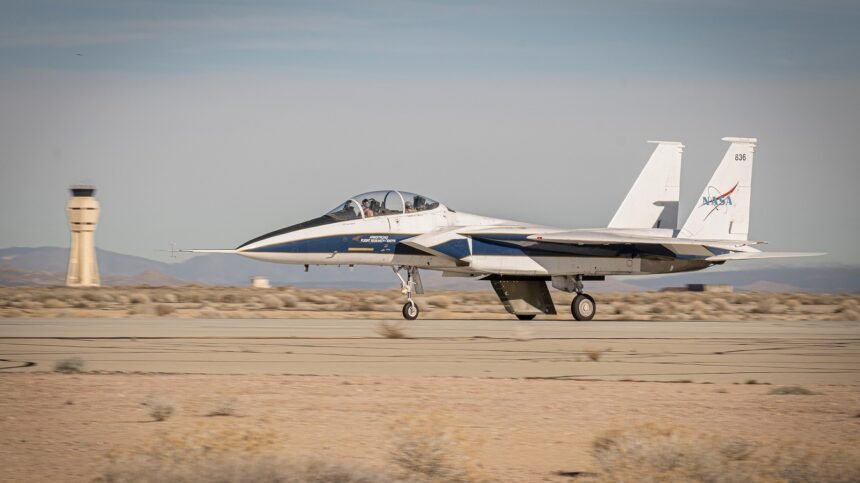
NASA’s Cutting-Edge Experiment with a Fighter Jet
NASA has been working on a groundbreaking project that could change the face of air travel. By testing an unconventional wing design on a fighter jet, the space agency aims to reduce fuel consumption, making flights more economical and environmentally friendly.
The airline industry’s highest operating cost is fuel, which accounts for a substantial portion of their expenses. According to NASA, a 10% fuel savings achieved by the innovative CATNLF wing design would translate to millions of dollars in savings for airlines. For instance, a typical Boeing 777 flight could benefit significantly from this reduction in fuel costs, resulting in lower fares for passengers and increased profitability for airlines.
How the CATNLF Wing Design Works
The CATNLF (Ceramic Matrix Composite Anti-Ice Tailored Nanostructured Leading Edge) wing design incorporates advanced materials and a unique shape to minimize drag and maximize lift. This innovative design allows for smoother airflow over the wing, reducing the amount of fuel required to generate thrust.
- Advanced materials: The use of ceramic matrix composites provides exceptional strength-to-weight ratio, enabling the creation of complex shapes and structures.
- Tailored nanostructured leading edge: The wing’s leading edge is engineered to reduce ice formation, which can significantly impede airflow and increase fuel consumption.
- Optimized shape: The CATNLF wing design features a curved shape that minimizes drag and maximizes lift, resulting in improved fuel efficiency.
Implications and Future Prospects
The successful implementation of the CATNLF wing design could have far-reaching implications for the aviation industry. With the potential to reduce fuel costs, airlines may be able to offer more competitive fares, making air travel more accessible to a wider audience. Additionally, the environmental benefits of decreased fuel consumption could contribute to a more sustainable future for air travel.