
The Vertical Scaling Conundrum
A common misconception in the database world is that vertical scaling is the solution to all problems. The idea is that by adding more resources, such as CPUs, RAM, and IOPS, a single Postgres instance can handle increasing demands. However, this approach has its limitations.
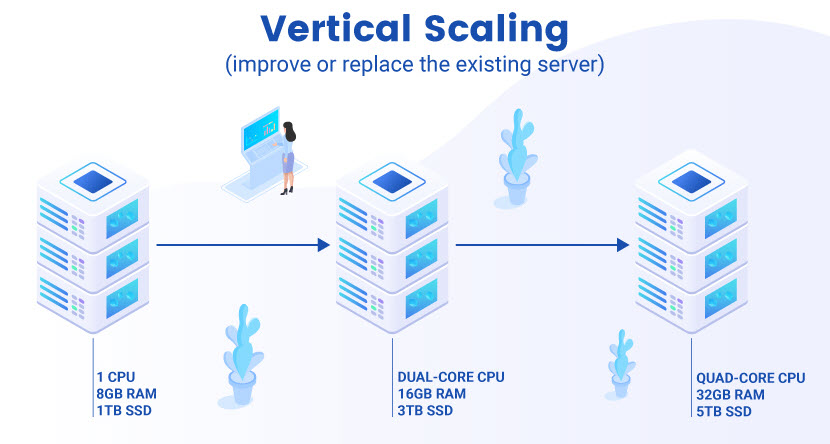
While vertical scaling can provide temporary relief, it is not a sustainable solution. As the database grows, the law of diminishing returns applies, and the costs of scaling up can become prohibitively expensive. Moreover, a single instance can become a bottleneck, leading to reduced performance and increased latency.
The Scaling Ceiling
There is a ceiling to how far a single Postgres instance can scale. As the instance grows, it becomes increasingly difficult to maintain performance, and the risk of downtime and data loss increases. This is because a single instance is a single point of failure, and any issues that arise can bring down the entire system.
To overcome the scaling ceiling, it’s essential to consider alternative approaches, such as horizontal scaling, load balancing, and distributed databases. These solutions allow for greater flexibility, scalability, and reliability, making them better suited to handle large, complex workloads.
Breakthrough Solutions
- Horizontal scaling: allows for the addition of more nodes to the system, increasing throughput and reducing the load on individual instances.
- Load balancing: distributes traffic across multiple instances, ensuring that no single instance becomes a bottleneck.
- Distributed databases: designed to handle large, complex workloads, these databases provide a scalable and reliable solution for data management.