
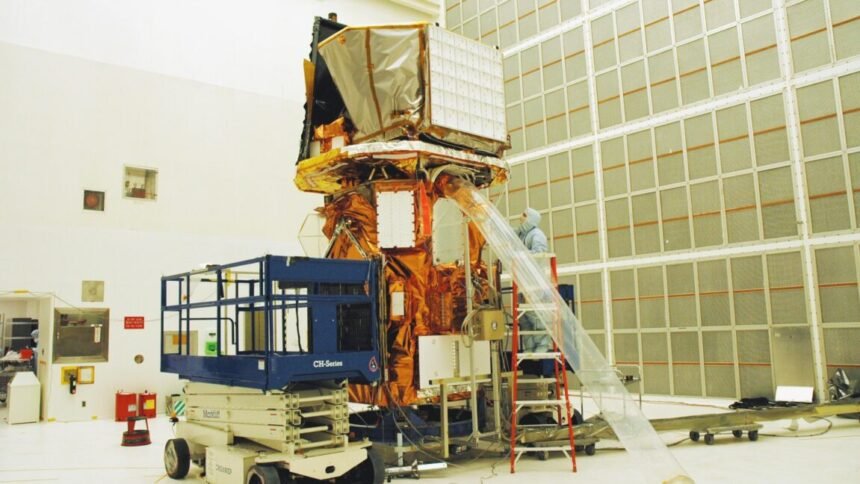
A Desperate Bid to Save a NASA Satellite
A team of experts from Katalyst Space Technologies is on a high-stakes mission to rescue a unique NASA satellite that is falling out of orbit. With a deadline to launch the rescue operation by this summer, the team is racing against time to save the valuable asset from being lost forever.
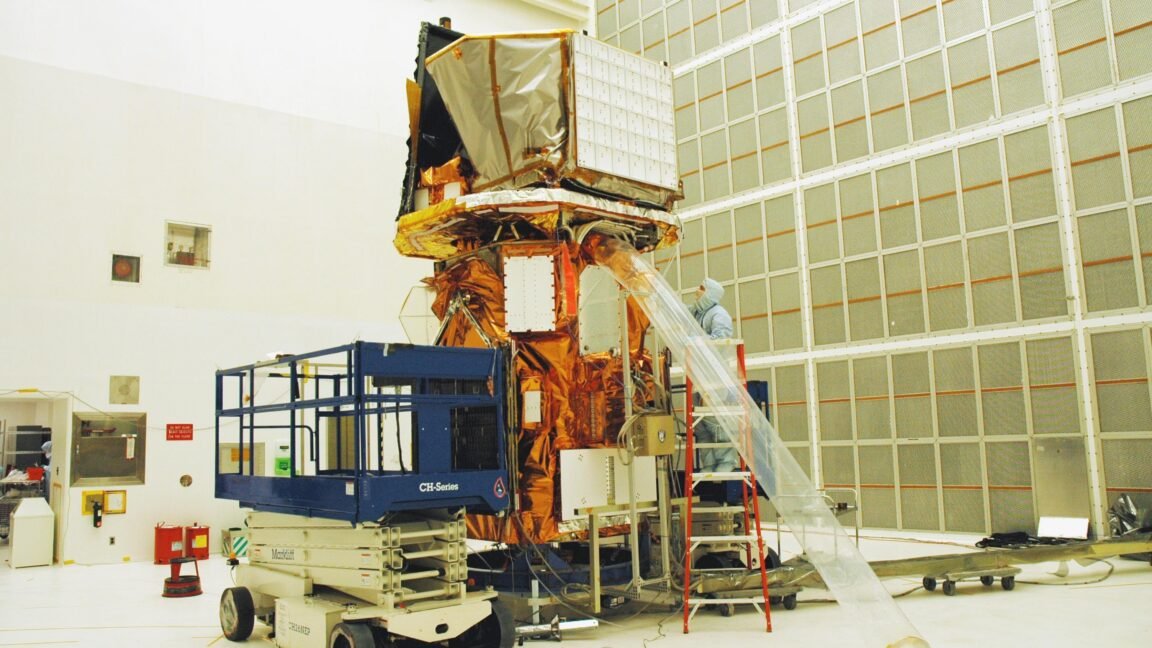
The NASA satellite in question is a cutting-edge piece of technology that has been providing crucial data and insights for various scientific studies. Its loss would not only be a significant setback for the scientific community but also a substantial financial blow, given the high cost of launching and maintaining such satellites.
The Challenges Ahead
The rescue mission, dubbed the Swift rescue mission, is a complex operation that requires meticulous planning and execution. The team must navigate through a range of challenges, including the satellite’s rapidly decaying orbit, limited communication windows, and the harsh conditions of space.
- Orbital decay: The satellite’s orbit is decaying at an alarming rate, making it essential to act quickly to prevent it from entering the Earth’s atmosphere and disintegrating.
- Communication challenges: The team must establish a stable communication link with the satellite, which is becoming increasingly difficult due to its distance and velocity.
- Space debris: The rescue mission must also contend with the risks of space debris, which can pose a significant threat to the satellite and the rescue spacecraft.
Despite these challenges, the team at Katalyst Space Technologies remains optimistic about the mission’s success. With years of experience in space technology and a deep understanding of the satellite’s systems, they are confident that they can rescue the satellite and extend its lifespan.