Introduction to Genome Evolution
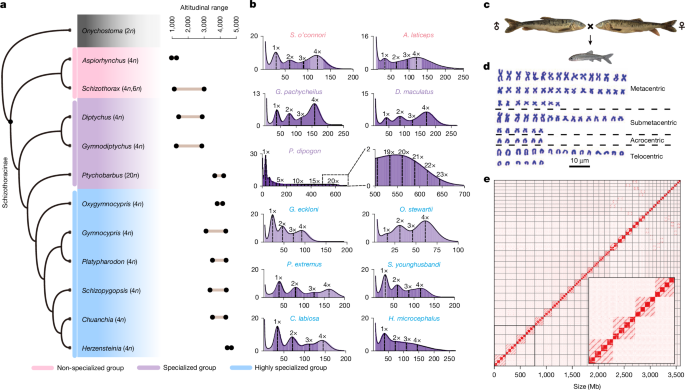
Genome evolution is a complex and fascinating field of study, with researchers continually uncovering new insights into the mechanisms that shape the genetic makeup of organisms. One key area of focus is the process of chromosomal fusions, which has been found to play a crucial role in the rediploidization of autopolyploid genomes. But what exactly does this mean, and how does it impact our understanding of evolutionary biology?

Understanding Autopolyploidy
Autopolyploidy occurs when an organism has multiple sets of chromosomes that are identical, as opposed to allopolyploidy, where the chromosome sets are derived from different species. This can happen through various mechanisms, including errors during cell division or hybridization between different species. Autopolyploid organisms can exhibit unique characteristics and traits, but they also face challenges in terms of genetic stability and evolution.
The Role of Chromosomal Fusions
Chromosomal fusions refer to the process by which two or more chromosomes merge to form a single, larger chromosome. This can occur through various mechanisms, including translocations, inversions, and deletions. In the context of autopolyploid genomes, chromosomal fusions can trigger a process called rediploidization, where the genome returns to a diploid state, with two sets of chromosomes. This can have significant implications for the evolution and adaptation of the organism.
Key Studies and Findings
- Research by Ohno (1970) and Dehal and Boore (2005) has shed light on the importance of gene duplication and whole-genome duplication in the evolution of vertebrates.
- These studies have shown that genome duplication events can provide a driving force for evolutionary innovation, allowing organisms to adapt to changing environments and exploit new ecological niches.
Conclusion
In conclusion, the study of chromosomal fusions and their role in the rediploidization of autopolyploid genomes has far-reaching implications for our understanding of evolutionary biology. By continuing to explore and uncover the mechanisms that underlie genome evolution, researchers can gain valuable insights into the complex and dynamic processes that shape the natural world.