Ancient Fish, Modern Discovery
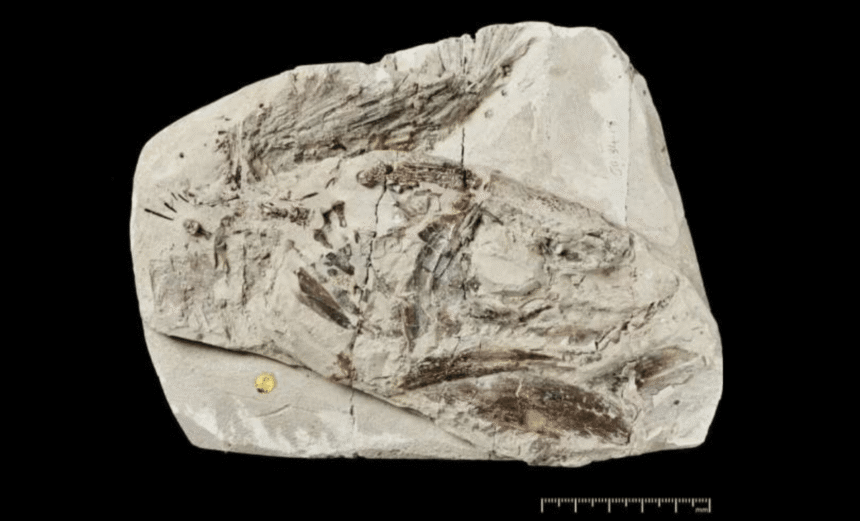
Paleontologists have made a groundbreaking discovery, uncovering a new species of coelacanth from a 150-year-old fossil housed at London’s Natural History Museum. This ancient fish, long thought to hold the key to understanding the evolution of its kind, has finally revealed its secrets.
The coelacanth, often referred to as a ‘living fossil,’ has been a subject of fascination for scientists and the general public alike. With its unique characteristics and ability to survive for millions of years with minimal changes, the coelacanth has been a crucial piece in the puzzle of vertebrate evolution.
Bridging the Gap
The newly identified species has helped bridge a significant 50-million-year gap in the coelacanth’s evolutionary history. This discovery not only sheds light on the coelacanth’s past but also provides valuable insights into the evolution of other vertebrates. By studying the characteristics of this ancient species, scientists can better understand how life on Earth has changed over time.
- The coelacanth’s ability to survive in deep waters with low oxygen levels has intrigued scientists, who believe that this adaptation may have contributed to its remarkable longevity.
- Further research is needed to fully understand the coelacanth’s evolutionary history and its significance in the context of vertebrate evolution.
- The discovery of this new species highlights the importance of preserving and studying fossils, which can hold the key to unlocking the secrets of the past.