
A New Era in Paleontology: Challenging Long-Held Assumptions
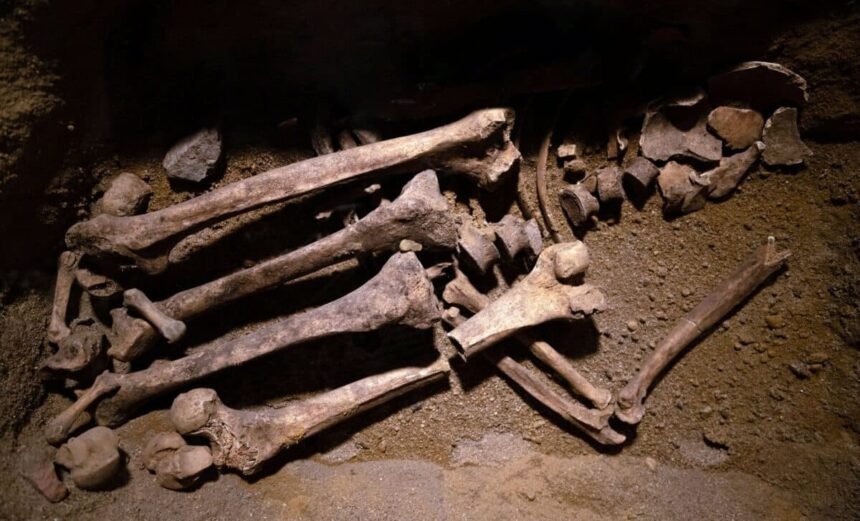
For over six decades, the scientific community has been under the impression that ancient human fossils were discovered in the Ushikawa district of Japan. However, a recent study has turned this notion on its head, revealing that these fossils do not belong to humans after all. This groundbreaking finding has sent shockwaves through the world of paleontology, prompting a reevaluation of our understanding of human evolution and the history of our species.
The fossils in question, unearthed in the Ushikawa district, were initially believed to be among the oldest human remains found in Japan. The discovery sparked widespread interest and debate among scientists, with many attempting to unravel the secrets surrounding these ancient bones. Yet, despite the extensive research and analysis, the true nature of these fossils remained elusive – until now.
Unraveling the Mystery: A New Perspective
The latest study, which employed cutting-edge techniques and meticulous examination, has successfully identified the fossils as belonging to a non-human species. This revelation not only challenges the long-held assumptions about human presence in Japan but also underscores the complexity and nuances of the fossil record. As scientists continue to delve deeper into the mysteries of the past, it becomes increasingly clear that our understanding of human evolution is far from complete.
- The Ushikawa fossils were initially thought to be between 10,000 to 20,000 years old, placing them among the earliest human inhabitants of Japan.
- Further analysis revealed that the fossils exhibited characteristics distinct from those of early humans, leading researchers to reclassify them as non-human.
- This discovery highlights the importance of ongoing research and the need for continuous reevaluation of our current understanding of human history.
This newfound knowledge opens up avenues for further investigation, inviting scientists to explore fresh perspectives on human migration and the peopling of Japan. As the field of paleontology continues to evolve, it is likely that more surprises and discoveries await, each one shedding light on the intricate and fascinating narrative of human existence.