

A Groundbreaking Find in the Realm of Astrophysics
A team of scientists has made a potentially historic discovery, unintentionally detecting dark matter in 2019. This accidental find could be the key to unlocking the mysteries of the universe, and it’s been hiding in plain sight within existing data on gravitational wave ripples in spacetime.
The detection of dark matter, a type of matter that does not emit or reflect any electromagnetic radiation, has long been a elusive goal for scientists. Despite its invisible nature, dark matter’s presence can be inferred by its gravitational effects on visible matter and the way it warps the fabric of spacetime.
Gravitational Waves and the Role of Spacetime Ripples
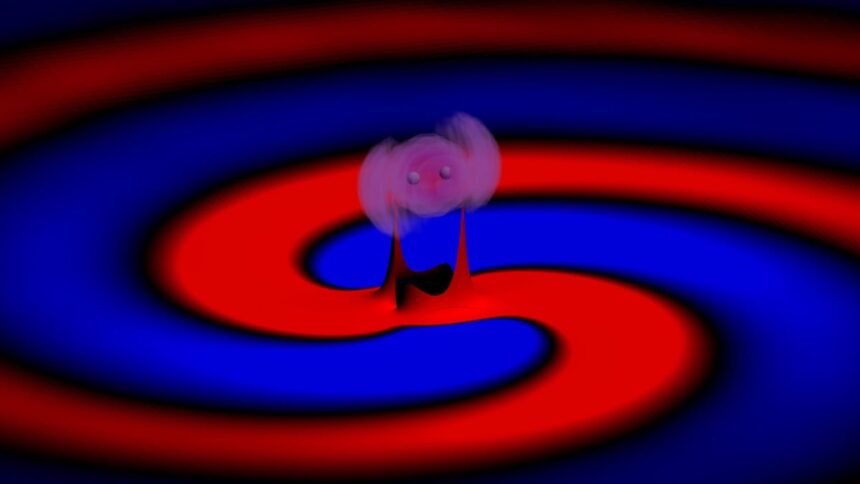
Gravitational waves are disturbances in the curvature of spacetime, produced by violent cosmic events such as the collision of two black holes or neutron stars. By analyzing these ripples, scientists can gain insights into the fundamental nature of the universe and the behavior of celestial objects.
- Gravitational waves were first directly detected in 2015 by the Laser Interferometer Gravitational-Wave Observatory (LIGO).
- Since then, numerous observations have been made, providing a wealth of data for scientists to study.
- The accidental detection of dark matter could be a game-changer for our understanding of the universe.
As researchers continue to analyze the existing data, they may uncover more evidence of dark matter’s presence, paving the way for further investigation and potential breakthroughs.