
Introduction of Robot Runners in Marathons
In a startling display of artificial intelligence and mechanical prowess, robot runners have successfully outpaced human competitors in the recent Beijing half-marathon. This unprecedented outcome has sparked widespread discussion about the potential of robotics in sports and the future of human-machine competition.
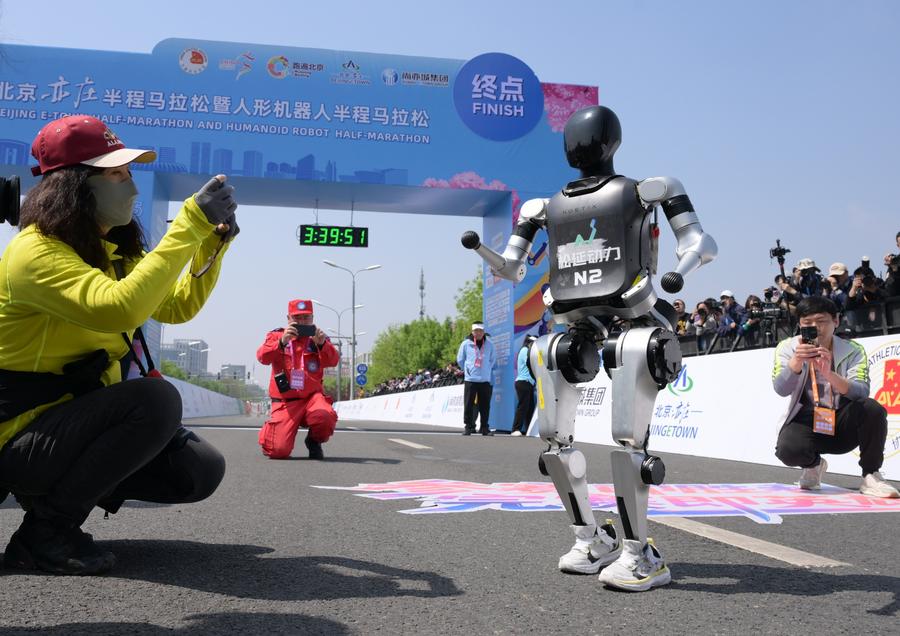
The robots, engineered with advanced AI algorithms and sophisticated mechanical limbs, demonstrated remarkable endurance and agility throughout the race. Their ability to maintain a consistent pace and capitalize on strategic moments allowed them to surpass their human counterparts, leaving spectators and participants alike in awe.
Key Factors Contributing to Robotic Success
- Advanced AI Technology: The integration of cutting-edge AI enabled the robots to analyze the race environment, predict outcomes, and make strategic decisions in real-time.
- Efficient Energy Management: The robots’ ability to optimize energy consumption allowed them to maintain a high level of performance throughout the race without fatigue.
- Innovative Mechanical Design: The design of the robots’ limbs and chassis facilitated efficient movement and stability, contributing to their overall speed and agility.
This breakthrough achievement in robotic racing raises interesting questions about the future of sports and human-machine interaction. As technology continues to advance, we can expect to see more instances of robots participating in and potentially dominating various competitive events.