
Introduction to a Hidden World of Viral Transmission
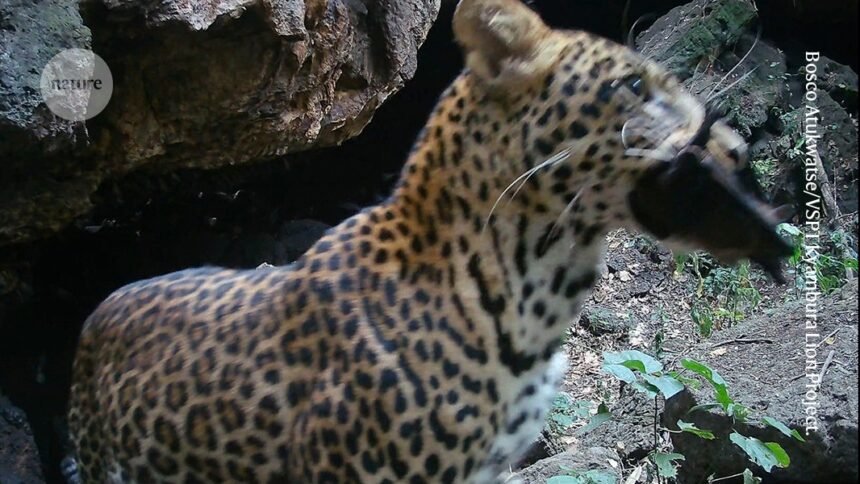
In a groundbreaking study, researchers have made a pivotal discovery that sheds light on how deadly viruses spread among animals. This revelation comes from an unexpected source: the feeding habits of leopards in African caves. A recent observation in Uganda has provided the first confirmation that leopards eat live bats, captured in a remarkable video that is rewriting our understanding of interspecies viral transmission.
The Discovery
The video, taken in a cave in Uganda, shows an African leopard preying upon bats. This might seem like a straightforward act of predation, but it holds significant implications for our comprehension of how viruses, such as Ebola and SARS, can jump from one species to another. The act of a leopard consuming live bats could be a critical vector for the spread of these deadly diseases.
Understanding the Risks
The intersection of wildlife and disease transmission is complex. When leopards hunt bats, they are not only engaging in a natural act of predation but are also potentially exposing themselves to a myriad of viruses that bats can carry. This exposure can then be transmitted to other animals, including possibly humans, through various means, creating a web of disease transmission that is difficult to predict and control.
Implications for Public Health
The study of how viruses move between species is crucial for public health. By understanding these pathways, scientists can better predict and prepare for potential outbreaks. The video of the leopard and the bats serves as a stark reminder of the interconnectedness of ecosystems and the potential for diseases to spread rapidly across different species.
Future Research Directions
This discovery opens up new avenues for research. Scientists will be keen to investigate further the dynamics of viral transmission between leopards, bats, and potentially other animals. This includes studying the types of viruses that are prevalent in bat populations, how these viruses interact with leopard biology, and what factors might influence the likelihood of transmission to humans or other species.
More Read

- Understanding the ecology of bat populations and their role in viral ecosystems.
- Investigating the immune response of leopards to bat-borne viruses.
- Developing strategies for reducing the risk of viral transmission at the human-wildlife interface.