
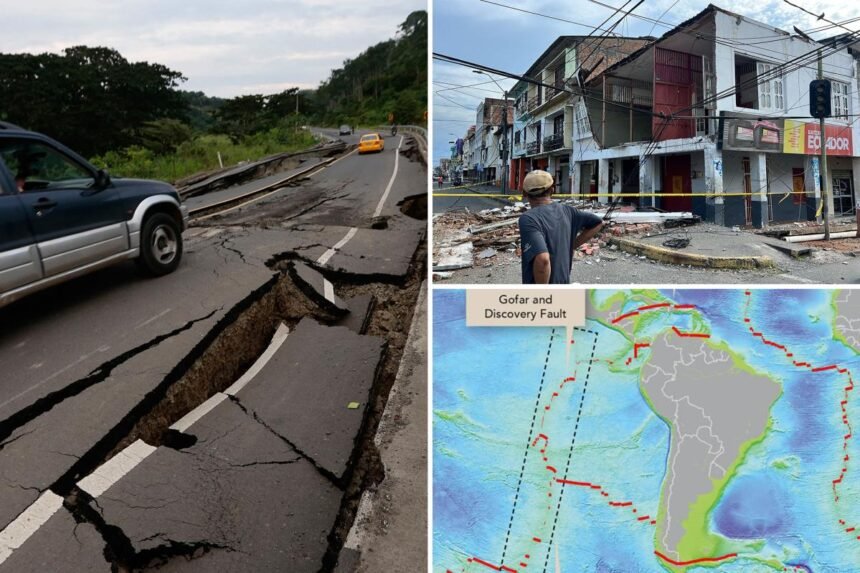
Introduction to Earthquake-Stopping Brake Zones
A recent study has made a groundbreaking discovery regarding underwater 'brake zones' that have the potential to stop earthquakes in their tracks. These hidden zones, found beneath the ocean's surface, have been identified as the key to understanding how to mitigate the impact of seismic activity.
The Science Behind Brake Zones
Researchers have been studying the unique mechanisms that allow these underwater brake zones to halt earthquakes. The findings, published in a prominent scientific journal, reveal that the interaction between tectonic plates and the Earth's crust plays a crucial role in the formation of these zones. By analyzing seismic data and conducting experiments, scientists have been able to replicate the conditions necessary for the creation of these brake zones.
- The process involves the movement of tectonic plates, which can either move apart, collide, or slide past one another.
- When these plates interact, they can create areas of high stress, leading to the buildup of energy that is eventually released as an earthquake.
- However, in certain regions, the unique combination of geological factors can lead to the formation of brake zones, effectively absorbing the energy and stopping the earthquake.
Implications of the Study
The discovery of these underwater brake zones has significant implications for our understanding of earthquakes and their behavior. By studying these zones, scientists may be able to develop new methods for predicting and mitigating seismic activity, ultimately saving lives and reducing damage to infrastructure.