
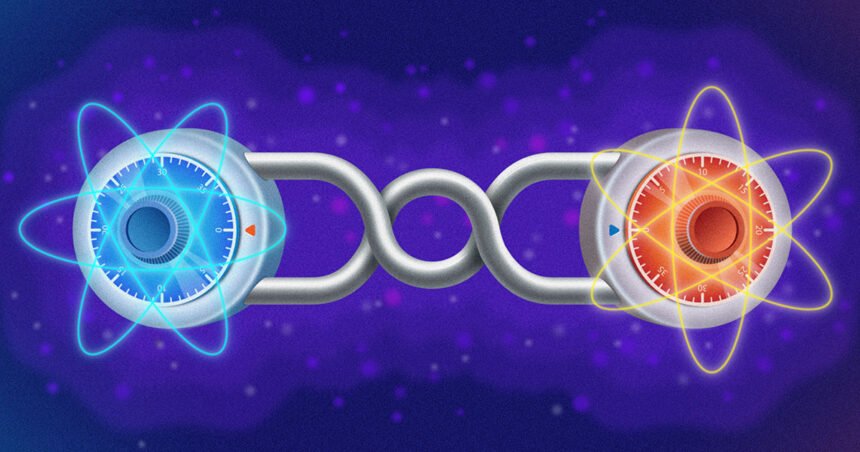
Quantum Computing and Cybersecurity: A New Frontier
For decades, researchers have been exploring the potential of quantum computers to crack the codes that secure our digital world. As quantum technology advances, it’s becoming increasingly clear that these powerful machines will eventually be able to break through many of the encryption methods currently in use.
To protect against this potential threat, scientists are turning to a new field of study known as quantum ‘jamming.’ This innovative approach involves using quantum mechanics to create unbreakable codes, rather than relying on traditional encryption methods.
The Principles of Quantum Jamming
Quantum jamming is based on the fundamental principles of quantum mechanics, which describe the behavior of particles at the smallest scales. By harnessing these principles, researchers can create quantum systems that are inherently secure, making it impossible for even the most powerful computers to crack the code.
- Quantum entanglement: a phenomenon in which particles become connected, allowing for secure communication.
- Quantum superposition: the ability of particles to exist in multiple states simultaneously, making it difficult for hackers to determine the code.
- Quantum measurement: the process of observing particles, which can be used to detect any attempted hacking.
By understanding and exploiting these quantum principles, scientists can develop new, unbreakable encryption methods that will secure our digital world against even the most powerful quantum computers.