
Introduction to the Human Neocortex
The human neocortex, the outer layer of the brain, is responsible for numerous higher-order functions, including thought, action, and perception. Understanding its functional hierarchy is crucial for grasping how the brain operates and evolves from infancy through old age.
Study Overview
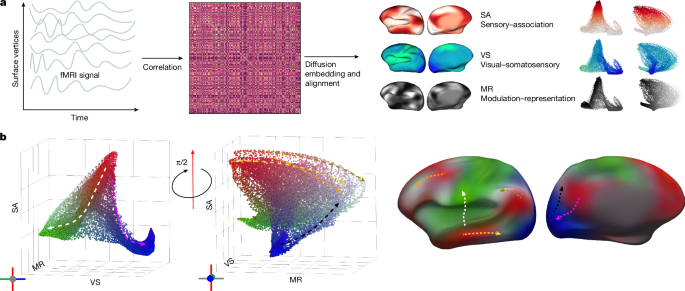
A comprehensive study utilizing data from five distinct imaging datasets, including the Birth to 5 (BCP49) and various cohorts of the Human Connectome Project (HCP), has provided insights into the development and ageing of the neocortex. The datasets encompass a wide age range, offering a unique opportunity to map the brain’s functional changes across the human lifespan.
Key Findings
- The study revealed that the neocortex’s functional hierarchy undergoes significant changes as individuals grow and age.
- From childhood through young adulthood, the brain exhibits heightened plasticity and adaptability, with areas dedicated to learning and development showing pronounced activity.
- In contrast, older adults display a more stabilized neural network, with certain regions showing reduced activity, potentially indicative of cognitive decline.
Implications and Future Research
The findings of this study contribute significantly to our understanding of brain development and aging, offering potential avenues for the diagnosis and treatment of neurological disorders. Further research, incorporating longitudinal studies and diverse participant pools, will be essential for unraveling the complexities of the human neocortex and its evolution over time.