

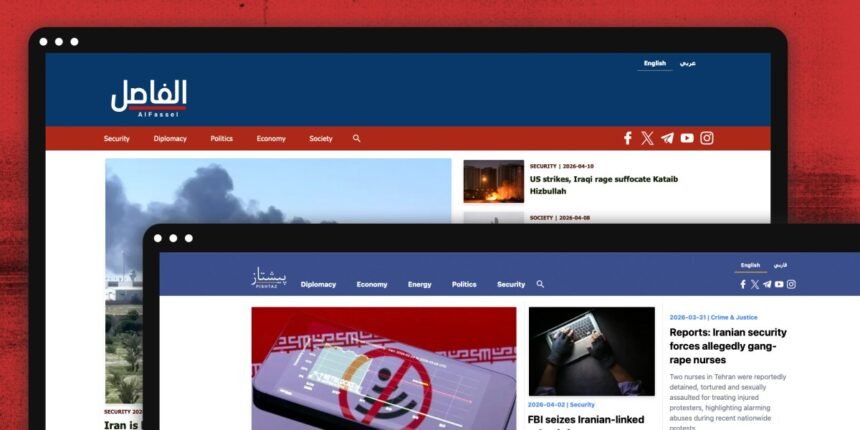
Introduction to the Deceptive News Landscape
In the realm of modern journalism, the lines between authentic reporting and propaganda have become increasingly blurred. Two notable examples are Al-Fassel and Pishtaz News, websites that outwardly appear as legitimate news sources, complete with sleek designs and active social media presence. However, a deeper investigation reveals a more complex and intriguing story. These sites, despite their Middle Eastern focus, are actually operated by the U.S. government, raising significant questions about the role of propaganda in international geopolitics.


The Operational Scope of U.S. Government Propaganda
The U.S. government’s involvement in such operations is not a new phenomenon but has evolved significantly over the years. These websites are part of a broader strategy to influence public opinion and shape the narrative on critical issues, especially in regions of strategic importance like the Middle East. By creating and disseminating content that aligns with U.S. foreign policy objectives, these sites contribute to a sophisticated information warfare effort.
Techniques of Propaganda and Influence
One of the key techniques employed by these propaganda operations is the use of credible-looking news websites and social media accounts. By mimicking the appearance and functionality of legitimate news sources, they aim to build trust among their audience. This trust is then leveraged to disseminate information that supports U.S. interests, often under the guise of objective reporting. Another strategy involves the production and dissemination of videos, podcasts, and other multimedia content designed to engage a wider audience and further embed the desired narrative.
- Manipulation of Public Opinion: Shaping the narrative to favor U.S. foreign policy objectives.
- Influence on Geopolitical Discourse: Contributing to the global conversation on Middle Eastern issues with a biased perspective.
- Use of Social Media: Utilizing platforms to spread information and build a community around the propagated narrative.
Implications and Ethics of Government Propaganda
The discovery of such operations raises significant ethical and legal questions. The use of propaganda by governments to influence foreign public opinion can be seen as a form of soft power, but it also challenges the principles of transparency and honesty in international relations. Furthermore, it underscores the need for a critical and discerning approach to consuming news, especially from sources that may have hidden agendas.