The Grand Opening of Peter Zumthor’s LACMA Building
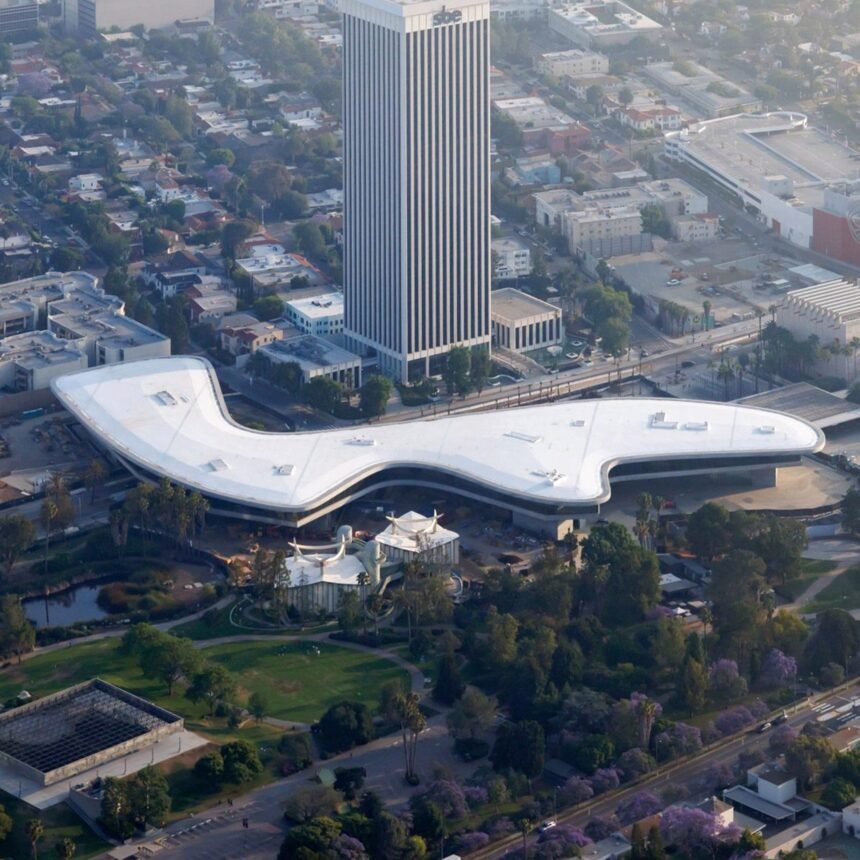
As the highly anticipated Los Angeles County Museum of Art, designed by the renowned architect Peter Zumthor, opens its doors to the public, it is evident that this structure is more than just a work of art. It is a reflection of the current moment, a time of great change and uncertainty. The building’s unique design and architecture serve as a testament to the ingenuity and creativity of its creator, while also capturing the essence of the modern era.
The LACMA building’s unconventional design has sparked both praise and criticism, with some hailing it as a masterpiece and others questioning its functionality. However, as we delve deeper into the structure’s intricacies, it becomes apparent that its unorthodox design is not just a product of aesthetic innovation, but also a reflection of the complexities of our time. The building’s curved lines, geometric shapes, and blend of modern materials all contribute to an otherworldly atmosphere, one that is both fascinating and unsettling.
Examining the Cultural Significance
The LACMA building’s impact extends beyond the realm of architecture, as it also holds significant cultural and societal implications. In an era marked by rapid technological advancements, social upheaval, and environmental concerns, this structure serves as a physical manifestation of our collective anxieties and aspirations. The building’s futuristic design can be seen as a symbol of humanity’s perpetual quest for innovation and progress, while its unconventional shape and layout may also be interpreted as a commentary on the disjointedness and uncertainty of modern life.
- The LACMA building’s design has been influenced by the natural surroundings of Los Angeles, incorporating elements of the city’s unique landscape and climate.
- The structure’s use of sustainable materials and energy-efficient systems reflects the growing awareness of environmental issues and the need for eco-friendly practices in modern architecture.
- The building’s flexible layout and adaptable spaces are designed to accommodate a wide range of artistic and cultural events, fostering a sense of community and creativity.