
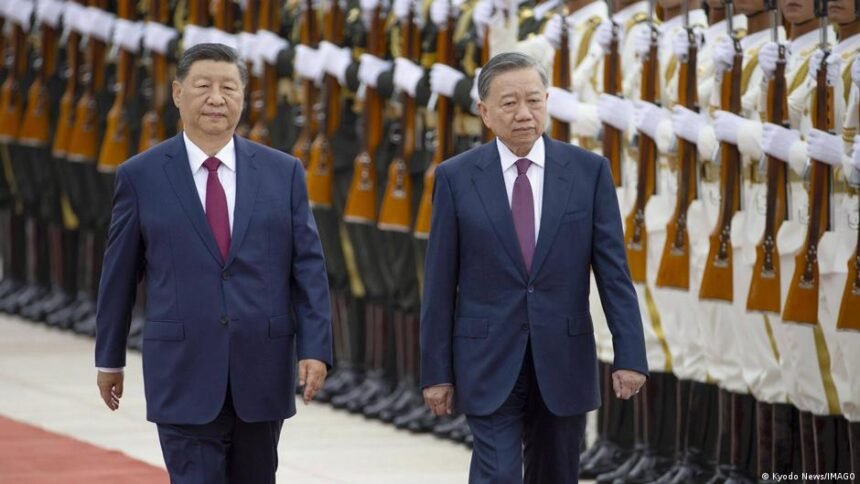
Vietnam’s Presidential Appointment Sparks Interest
Recently, To Lam, the leader of the Vietnamese Communist Party, was unanimously voted as the country’s president by the National Assembly. This move has garnered significant attention, as it goes against the informal norms that have been in place for decades.
The appointment of To Lam as the president of Vietnam marks a significant shift in the country’s political landscape. As the leader of the Communist Party, Lam’s ascent to the presidency is seen as a strategic move, aiming to consolidate power and ensure continuity in the government.
Implications of the Leadership Change
The implications of this leadership change are multifaceted. On one hand, it may lead to a more streamlined decision-making process, as the same individual will be heading both the party and the government. On the other hand, it may also raise concerns about the concentration of power and the potential impact on the country’s democratic institutions.
- The new leadership may lead to a more aggressive pursuit of economic growth and development, potentially leading to increased foreign investment and trade.
- It may also result in a more authoritarian approach to governance, potentially limiting individual freedoms and civil liberties.
- Furthermore, the leadership change may have significant implications for Vietnam’s relationships with other countries, particularly in the context of regional and global politics.
As Vietnam continues to navigate its political and economic trajectory, the international community will be closely watching the developments in the country. With its strategic location and growing economic influence, Vietnam is poised to play a critical role in regional and global affairs.