Introduction to Meta-Assemblies
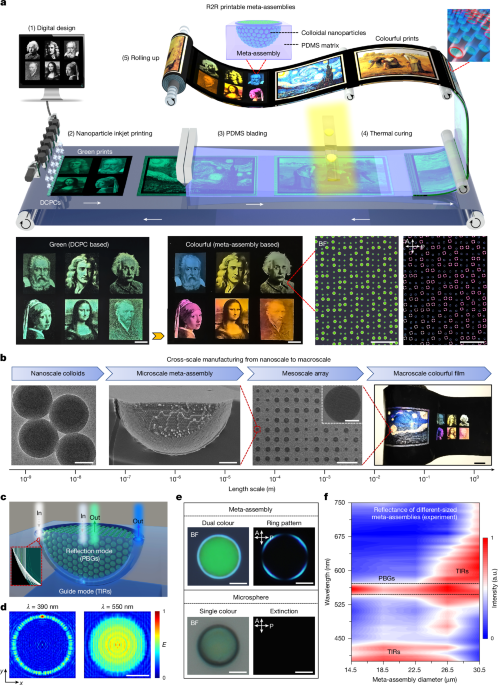
Recent breakthroughs in the field of materials science have led to the development of innovative technologies that are transforming the way we perceive and interact with colors. One such technology is the concept of printable meta-assemblies, which has been gaining significant attention in recent years. In a study published in Nature, researchers have made groundbreaking discoveries about the potential of these meta-assemblies to enable synergetic coloration.
Understanding Synergetic Coloration
Synergetic coloration refers to the phenomenon where the combination of different materials or structures produces a color that is more intense or vibrant than the sum of its individual components. This concept has been observed in various natural systems, such as the iridescent colors of butterflies and peacocks. The development of printable meta-assemblies has opened up new possibilities for creating synergetic coloration in a controlled and systematic manner.
Key Findings and Implications
The study by Stroud and Ratcliff provides valuable insights into the long-term evolution of meta-assemblies and their potential applications. The researchers used a combination of experimental and theoretical approaches to investigate the properties of these meta-assemblies and their ability to produce synergetic coloration. Their findings have significant implications for the development of new materials and technologies with unique optical properties.
- The use of printable meta-assemblies can enable the creation of complex colors and patterns that are not possible with traditional materials.
- The synergetic coloration produced by these meta-assemblies can be tailored and controlled by adjusting the properties of the individual components.
- The development of these technologies has the potential to transform various industries, including textiles, cosmetics, and displays.