Introduction to Interfacial Electron Transfer
Interfacial electron transfer is a fundamental process in various fields, including chemistry, materials science, and physics. It involves the transfer of electrons between two interfaces, which can be molecules, solids, or liquids. Understanding the mechanisms behind interfacial electron transfer is crucial for the development of new technologies, such as solar cells, fuel cells, and biosensors.
Reorganization Energy: A Key Component
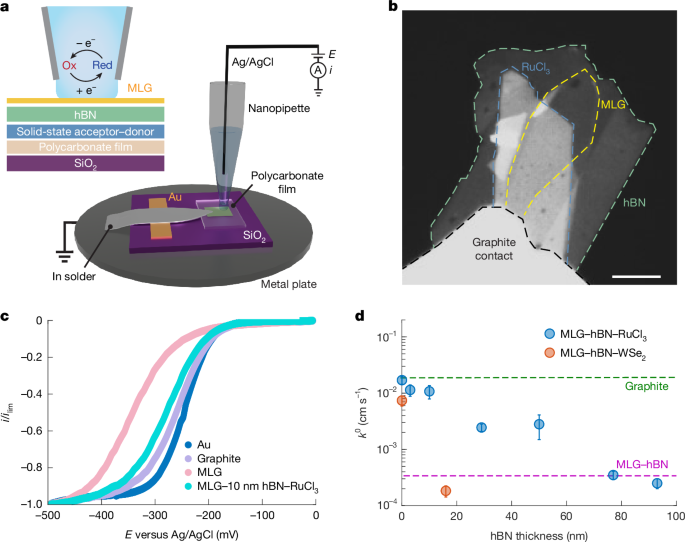
Reorganization energy is a critical component in interfacial electron transfer, as it determines the efficiency of the electron transfer process. Reorganization energy refers to the energy required to reorganize the molecular structure of the donor and acceptor molecules during the electron transfer process. A deeper understanding of the electronic origin of reorganization energy is essential for optimizing the performance of interfacial electron transfer-based devices.
Recent Studies and Findings
Recent studies have investigated the electronic origin of reorganization energy in interfacial electron transfer using advanced materials, such as natural Kish graphite crystals and hexagonal boron nitride crystals. These studies have provided valuable insights into the role of electronic factors in determining reorganization energy. The use of high-purity materials has enabled researchers to probe the intrinsic properties of interfacial electron transfer, shedding light on the underlying mechanisms.
Implications and Future Directions
The findings of these studies have significant implications for the development of interfacial electron transfer-based technologies. By understanding the electronic origin of reorganization energy, researchers can design and optimize materials and interfaces to enhance the efficiency of electron transfer. This can lead to the creation of more efficient solar cells, fuel cells, and biosensors, which can have a profound impact on our daily lives.
- Improved efficiency in solar cells and fuel cells
- Enhanced sensitivity in biosensors
- Development of new technologies, such as artificial photosynthesis