

2025 has proven to be a remarkable year for Mahindra’s farm-equipment business. In November 2025 alone, Mahindra sold 44,048 tractors (domestic + exports), compared to 33,378 units in November 2024 — a 32% year-on-year growth.
Domestic sales were 42,273 units, up 33% YoY, while export sales added 1,775 units (up 9%) in November.
This growth reflects not just pent-up demand, but broader structural and cyclical drivers: better farm incomes, supportive government policies, favorable weather conditions, and renewed rural confidence.
According to company reports, these monthly surges contribute to a broader upward trend: 2025’s Farm Equipment Sector (FES) has already registered its highest-ever annual domestic sales figures.


What’s driving the demand — big factors behind the surge
🌾 Strong farm economy & favorable weather
Increased kharif crop yields, good reservoir levels, and planned rabi sowing have boosted farm incomes and cash flow — enabling many farmers to invest in mechanization and upgrade old equipment.
More Read


🏷️ Policy tailwinds: GST cut & supportive regulations
Lower GST rates on agricultural equipment and favourable government support (e.g. better MSP — minimum support price) have made tractors more affordable. Many analysts credit the policy environment with a meaningful bump in demand.
🎉 Festive season timing & rural sentiment swing
November 2025’s spike also aligns with festival-season demand — a traditional time when rural buyers purchase new tractors. Mahindra’s management noted that sales during September–October (lead-up to festive period) were already up ~27%, which carried over into November.
🔁 Replacement demand & modernization push
As older tractors age and maintenance becomes costly, many farmers are replacing them with newer models. Coupled with greater awareness of productivity gains, this has increased demand for mid- and higher-power tractors.
🌍 Export growth
While domestic demand leads, Mahindra’s tractor exports have also grown. November 2025 saw 1,775 units exported — a 9% rise — signaling steady international demand, especially from neighboring and developing countries.

What Mahindra is doing — business strategy, outlook, and product support
📈 Upgraded growth forecast for FY26
Seeing strong demand, the company has revised its growth outlook. Rather than modest expectations at the start of FY26, Mahindra now anticipates low double-digit growth for the tractor industry, backed by monsoon recovery, reservoir levels, and favourable GST impact.
🚜 Focus on product mix and customer needs
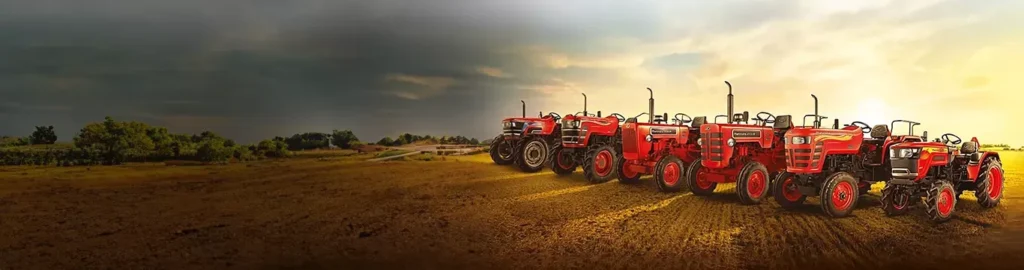
Mahindra continues to produce a wide range of tractors — from entry-level, low-HP models to powerful, high-utility tractors — ensuring coverage across small farms, mid-sized operations, and commercial agriculture. Their breadth helps them retain market share across different farmer segments.
🤝 Community & rural support (Skill Development Initiative)
Beyond just sales, Mahindra recently partnered with a state government to launch a skill-development centre in a rural district, aiming to train tractor operators and farm equipment technicians — a move that can strengthen rural employment, improve equipment maintenance standards, and build long-term goodwill.
Challenges & What Could Temper the Boom
🌦️ Dependence on weather & agricultural cycles
While 2025 saw good monsoon and favorable farm conditions, agriculture remains highly sensitive to rainfall patterns, reservoir levels, and crop cycles. A weak monsoon or erratic rainfall next season could slow demand sharply.
🔄 Market saturation/ replacement cycles
Many small farmers may have just upgraded — meaning in the short term, replacement demand may dip. Sustained high growth requires either new buyers (smaller farms growing) or continuous expansion of farm mechanization.
💸 Affordability for small farmers
Despite subsidised GST etc., tractors remain a significant investment. For marginal and small farmers, costs, credit availability, and loan interest will remain critical factors in purchase decisions.
🌍 Export & global headwinds
Global economic slowdowns, logistic disruptions, or regulatory difficulties could affect export demand. Since exports are a smaller portion of sales (but growing), any global disruption could dent overall numbers.
What This Means for Farmers & Agricultural Sector
- More mechanization: As tractors become more accessible, more farmers may adopt mechanized farming — which can increase productivity, reduce manual labor dependency, and improve farm yield.
- Rural economic upliftment: Skill-centre initiatives + tractor demand may generate rural employment and enhance farm equipment servicing networks.